

Why Phishing Is Still a Big Risk for Minnesota Organizations
Phishing emails remain one of the most effective ways cybercriminals trick employees into giving up passwords, clicking on malicious links, or sharing sensitive information. For small businesses and nonprofits across Minnesota, one wrong click can mean downtime, data loss, or even financial damage.
At CSI Tech Corp, we regularly see real-world phishing attempts targeting organizations in the Twin Cities and beyond.
Below are two of the most common scams we encounter — and how you can protect your team.
1. The “DocuSign” Impersonation
This phishing attack arrives as an email that looks like it came from DocuSign, often with subject lines like “Amendment to Agreement” or “Pending Review.”
The email usually includes a large “Review Documents” button urging the recipient to act quickly.
Example of a phishing email impersonating DocuSign (notice the fake domain).
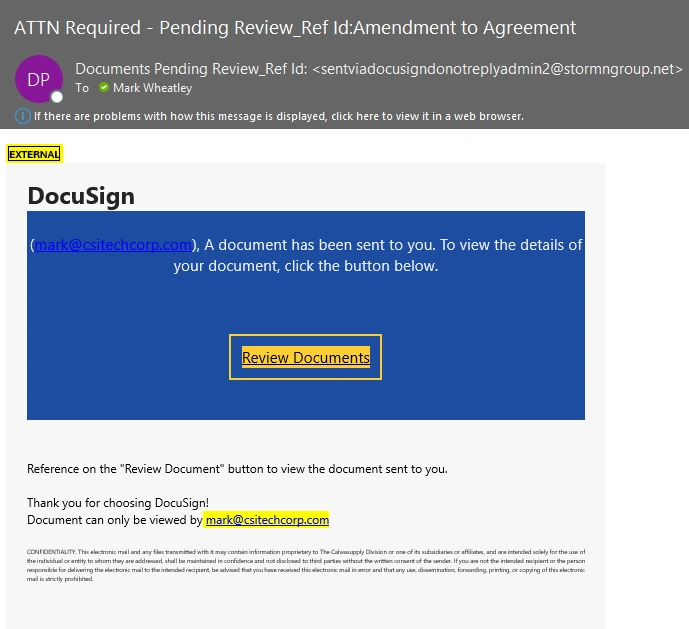
What really happens: the link doesn’t lead to DocuSign at all. Instead, it directs the victim to a fake login page designed to steal credentials. In some cases, clicking can even install malware.
How to protect your business:
• Always check the sender’s domain carefully (real DocuSign emails come from @docusign.com).
• Hover over links before clicking to verify the URL.
• When in doubt, access DocuSign by typing the address directly into your browser.
2. The “Cloud Storage Subscription Alert”
Another common scam pretends to be from a cloud provider such as Microsoft or Google. The email warns that your subscription has expired, or your payment failed — and threatens that your files will be deleted unless you update billing immediately.
Cloud storage phishing scam trying to trick users into updating billing information.
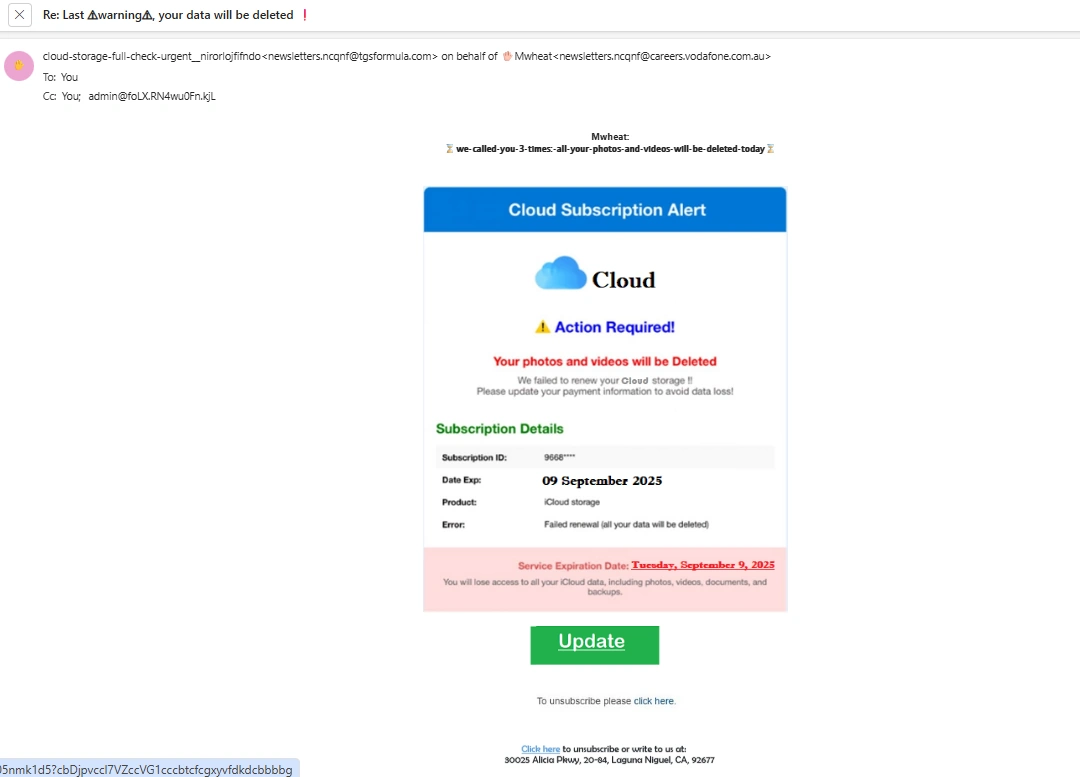
The goal: trick employees into entering credit card details or login credentials on a fake page.
For nonprofits and businesses that depend on cloud services, this scary tactic can be especially damaging.
How to protect your business:
• Be skeptical of urgent “your account will be deleted” emails.
• Log in directly to your cloud service’s website rather than using a button in the email.
• Train employees to spot red flags such as generic greetings, odd email addresses, or inconsistent branding.
Why Cybersecurity Awareness Matters for Minnesota Organizations
Even the best security tools can’t fully protect your organization if employees aren’t trained to recognize phishing attempts.
Regular security awareness training, combined with managed IT services, helps organizations stay protected without overwhelming staff.
At CSI Tech Corp, we work with Minnesota businesses and nonprofits to:
- Provide hands-on cybersecurity awareness training,
- Deliver ongoing IT support and monitoring,
- Secure cloud environments and critical data.
Ready to Protect Your Organization?
Don’t wait until a phishing attack disrupts your operations. With CSI Tech Corp, you get local IT experts who understand the unique needs of Minnesota organizations.
Contact us today to learn how our Managed IT Services and Cybersecurity Solutions can help protect your organization.
What should I do if an employee clicks on a phishing email?
Immediately change affected passwords, disconnect the device from your network, and contact your IT provider to scan for malware.
Are phishing emails only sent to large companies?
No. Small businesses and nonprofits are frequent targets because cybercriminals assume they have fewer defenses.
How often should staff receive phishing awareness training?
At least once per year, with refresher whenever new threats emerge.
Can email filters stop phishing attacks completely?
Filters catch many suspicious emails, but not all. That’s why employee awareness remains critical.